In French-speaking wedding tradition — and particularly in French-speaking Switzerland — the vin d'honneur occupies a unique place. It is neither a cocktail reception nor a simple apéritif. It is a true social ritual that gathers extended family, close friends, neighbors and sometimes even colleagues to celebrate the couple's union together, before the more intimate dinner of the evening.
And yet, few couples planning their first wedding actually know how to organize one. How long should it last? What food and drinks should you serve? How many guests can you invite without inflating the budget? Here is a complete guide, rooted in French-Swiss tradition, to help you orchestrate this essential moment with ease.
What exactly is a vin d'honneur?
The vin d'honneur is a moment of conviviality held immediately after the wedding ceremony — whether civil, religious, or secular — and before the reception dinner that gathers the closest guests. Its social function is twofold: to allow the newlyweds to greet all their guests (including those who are not invited to the dinner), and to offer a smooth transition between the intense emotions of the ceremony and the warmth of the evening.
This tradition is deeply rooted in French-speaking culture. In Switzerland's Romandie region as in France, you typically invite more people to the vin d'honneur than to the dinner — and this is precisely the point. A great-aunt, a former colleague, a longtime neighbor can share a drink with the newlyweds without attending the formal dinner.
It is clearly different from a cocktail dinatoire (which replaces a sit-down meal) and from a classic apéritif (shorter, more restricted). The vin d'honneur is a format in its own right, with its own codes and rhythms.
When does the vin d'honneur happen during the day?
The classic timeline of a French-speaking wedding follows a precise logic. If you are getting married in Switzerland, it is important to know that a civil ceremony at the commune is mandatory for legal recognition, and generally precedes the religious or secular ceremony — either on the same day or the day before.
Here is the typical timeline of a Swiss wedding day:
- 10–11 am · Civil ceremony at the commune (usually short, 20–30 minutes)
- 2–3 pm · Religious or secular ceremony (1 to 1.5 hours)
- 4–6 pm · Vin d'honneur at the reception venue or nearby
- 7–8 pm · Start of the dinner with evening guests
The vin d'honneur therefore fits into a late-afternoon window, when natural light is still generous — ideal for group photos — and when children can still enjoy the moment before bedtime. This time slot is part of the tradition's natural charm.
What to serve at a vin d'honneur: drinks and bites
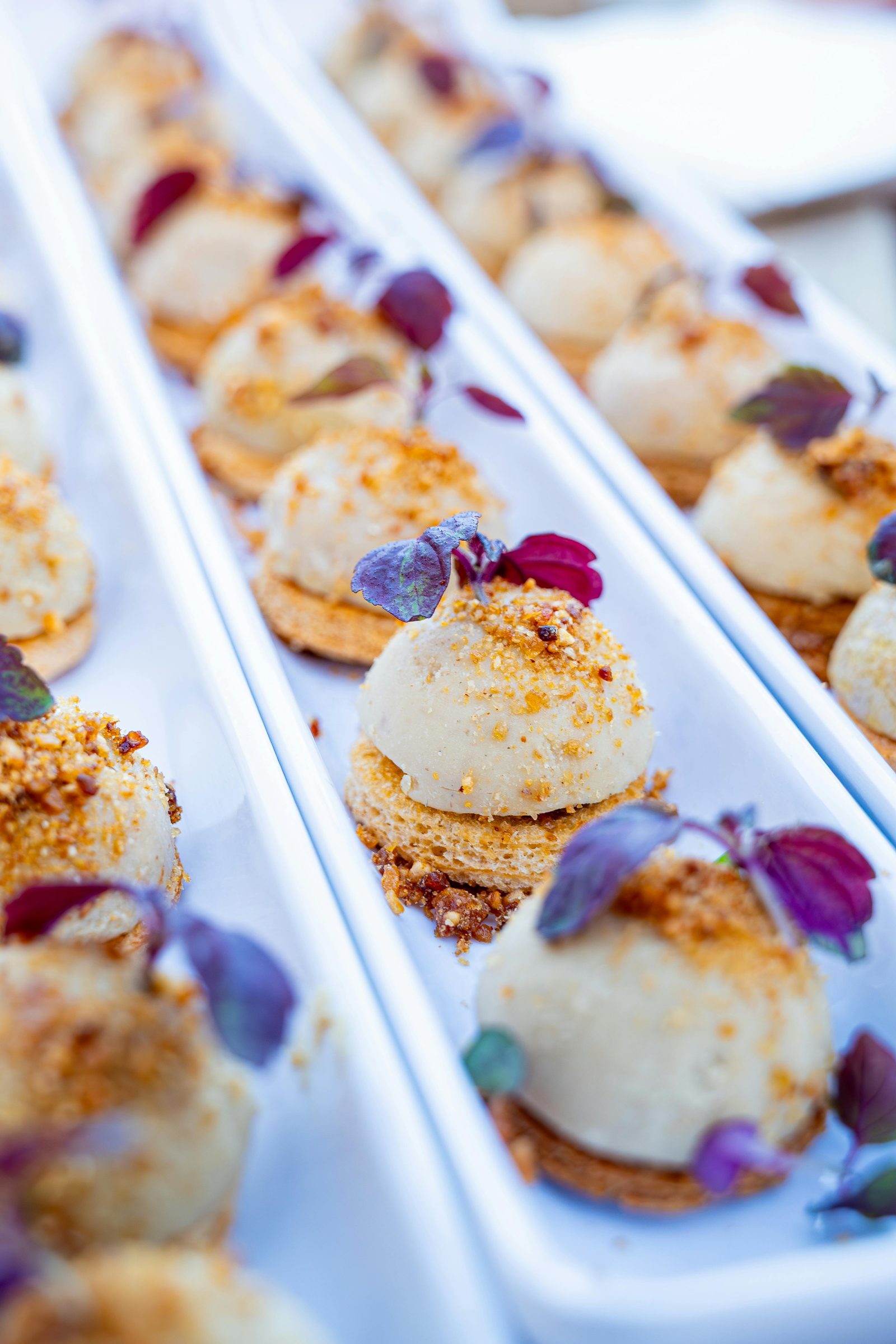
The vin d'honneur menu should be both generous and refined, without competing with the evening meal. The goal is to offer a convivial tasting that holds well for 1.5 to 2 hours, without fully satisfying guests who will stay for dinner.
Traditional drinks
In French-speaking Switzerland, locals often favor regional wines that showcase the terroir: a Chasselas from Lavaux or La Côte, a Vaud or Valais Pinot Noir, sometimes a Dôle cuvée for connoisseurs. Champagne or crémant remains essential for the official toast — count roughly one bottle for 5 to 6 guests.
Do not forget non-alcoholic options: still and sparkling waters, fresh fruit juices (grape, apple, orange), artisanal syrups, and increasingly an elegant mocktail selection. Aim for about one third of total drinks to be non-alcoholic — a proportion that rises if you expect many children or designated drivers.
Savory and sweet bites
The custom is to serve between 8 and 12 pieces per person for a 1.5 to 2 hour vin d'honneur. Aim for a balanced mix:
- Warm savory bites (mini-quiches, gougères, puff pastry)
- Cold savory bites (smoked salmon toasts, verrines, melon and cured ham skewers)
- Regional cheese platter (Gruyère AOP, Tomme Vaudoise, Vacherin Fribourgeois)
- Discreet sweet bites (macarons, mignardises, seasonal fruit)
The average budget in French-speaking Switzerland for a catered vin d'honneur sits between CHF 35 and 60 per person, excluding equipment rental and service. Expect more for a high-end event, less if you opt for a semi-catered or proudly DIY approach.
How long should the vin d'honneur last?
The ideal duration sits between 1.5 and 2 hours. Any shorter and you risk frustrating guests who haven't had time to greet the newlyweds. Any longer and attention drops, making the transition to dinner more complicated.
To keep the moment flowing, plan a few simple rituals that structure the event without making it rigid: an official toast from parents or witnesses at the start, light musical entertainment (string quartet, pianist, a carefully curated playlist), and ideally a guest book strategically placed for signatures.
The vin d'honneur is not a simple interlude. It is the moment when your wedding comes alive in the eyes of those who love you.
One often-overlooked practical tip: designate two trusted people (witnesses, close friends) to smooth introductions and direct guests toward drinks and bites. The newlyweds are rarely available during this moment — they are absorbed by group photos and emotional conversations with loved ones.
How to plan your vin d'honneur stress-free
A successful vin d'honneur is planned several months in advance. Here are the key steps to validate on your timeline:
- 6 months before · Choose the venue (consistent with the ceremony and reception, ideally within 15 minutes)
- 4 months before · Select the caterer and confirm the menu (sign quotes)
- 3 months before · Confirm the vin d'honneur guest count (often 1.5 to 2× the dinner count)
- 2 months before · Plan musical entertainment and equipment (high tables, glassware, parasols if outdoor)
- 1 month before · Brief witnesses and relay people for the wedding day
- The week before · Finalize the flow plan, drink lists, and bites with the caterer
This logistics can feel dizzying six months before the big day, but it manages smoothly with the right planning tool. This is precisely why we designed a complete wedding planner specifically for Swiss and European weddings, integrating every local particularity — from the vin d'honneur to the administrative formalities.
220 editable pages to organize your European wedding
A Canva planner designed for Swiss and European wedding traditions. With vendor checklists, multi-currency budget tracker, a dedicated vin d'honneur section and complete 12-month timeline. 220 editable pages.
The essentials to remember
The vin d'honneur is much more than a simple interlude: it is a central moment of any French-speaking wedding, a convivial transition where every guest — close or extended — can share a drink with the newlyweds. With 1.5 to 2 hours of duration, a balanced menu between savory and sweet, and logistics prepared months in advance, you offer your guests a memory as precious as the ceremony itself.
Happy planning, and a beautiful celebration to you both.